

This article explores the life of renowned American psychiatrist Dr. William Breitbart, whose work centers on psycho-oncology, psychosomatic medicine, and palliative care. Discover more about his childhood and impactful professional journey below, on Manhattanka.
Early Years
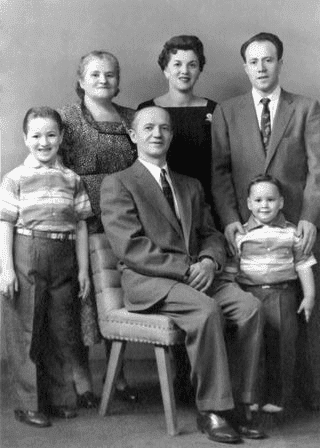
Dr. William Breitbart is an American psychiatrist. Born in 1951 in Manhattan’s Lower East Side, William grew up alongside his younger brother, Sheldon. He first attended The Rabbi Jacob Joseph School and later Stuyvesant High School. After graduating, Breitbart pursued his medical degree at The Albert Einstein College of Medicine. He then completed residencies in general psychiatry and internal medicine. William’s quest for knowledge didn’t end there; he continued his studies at Memorial Sloan Kettering Cancer Center (MSKCC), specializing in psycho-oncology and psychosomatic medicine. During his training, he earned several accolades, including a Career Development Award and a Clinical Fellowship Award.

Career Beginnings and Growth
In 1996, William Breitbart became Chief of the Psychiatry Service at Memorial Sloan Kettering Cancer Center (MSKCC). He later served as Vice Chairman of the Department of Psychiatry and Behavioral Sciences at MSKCC before ultimately becoming Chairman. During this time, Breitbart focused his research on the psychiatric aspects of end-of-life care. He also notably addressed the neuropsychiatric challenges faced by HIV-infected patients, studying the symptoms and psychological states of terminally ill individuals. In his subsequent projects, Dr. Breitbart worked on developing new psychotherapeutic interventions aimed at improving the psychological well-being of the terminally ill. These interventions concentrated on enhancing spiritual well-being, supporting and preserving meaning, and improving their overall quality of life. His research projects received significant funding from organizations such as the National Cancer Institute, the National Institute of Mental Health, and the National Institutes of Health.
Publications and Awards
Throughout his distinguished career, Dr. William Breitbart has published extensively on psychiatric topics, with a particular focus on end-of-life care and the psychiatric aspects of cancer and AIDS. Additionally, Breitbart has contributed to several edited collections, including: “Handbook of Psychiatry in Palliative Medicine,” “Psychiatric Aspects of Symptom Management in Cancer Patients,” “Psychosocial Aspects of Pain: A Handbook for Health Care Providers,” and “Psycho-oncology.” Dr. Breitbart also serves on the review and editorial boards of numerous prestigious journals, such as: Supportive Care in Cancer, The Journal of Supportive Oncology, Giornale Italiano di Psico-Oncologia, The Medical Journal of Australia, Journal of Pain and Symptom Management, Journal of Palliative Medicine, Cancer, Journal of Palliative Care, General Hospital Psychiatry, Archives of Internal Medicine, Journal of the American Medical Association, Network News, Current Pain and Headache Reports, Psychosomatic Medicine, and Psychosomatics.
It is also important to highlight that his prolific work has garnered him numerous honors and awards. These include accolades from the Academy of Psychosomatic Medicine, the Donald Oken Award from the American Psychosomatic Society, the Arthur Sutherland Lifetime Achievement Award from the International Psycho-Oncology Society, and a Lifetime Achievement Award from the Academy of Psychosomatic Medicine. Furthermore, William Breitbart is a recipient of the Willet F. Whitmore Award for Clinical Excellence from Memorial Sloan Kettering Cancer Center. He was also recognized as a “Best Doctor.”