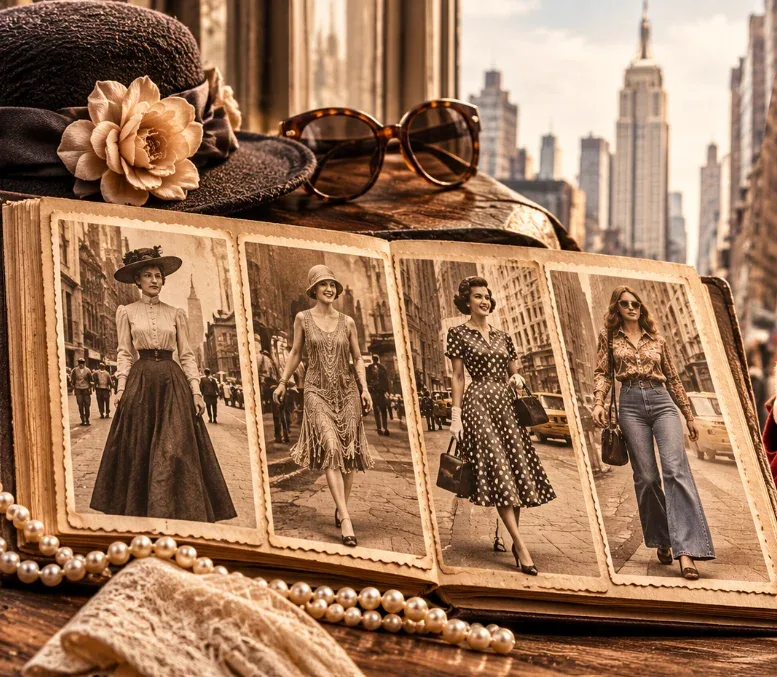
Evolution of the City Girl's Wardrobe: Decades of Style Seen Through Family Archives


Have you ever wondered why, among hundreds of digital snaps on our smartphones, we always find ourselves drawn back to those blurry, yellowed photographs in old family albums? Tucked inside heavy velvet covers or worn cardboard sleeves, right beside faded prints, you can often discover touching relics of the past: crumpled department store receipts, vintage subway tickets, or fabric swatches lovingly pinned to the margins. These treasures hold far more than just memories of loved ones—they preserve an authentic history of fashion that textbooks rarely capture. While European runways dictated distant, untouchable ideals, an entirely different kind of style was taking shape on the cobblestones of Manhattan, in Upper East Side schoolyards, across the lecture halls of Barnard College, and inside cozy Greenwich Village cafés—one that was real, vibrant, and deeply personal.
The everyday wardrobe of 20th-century city women quietly mirrored the shifting rhythms of their daily lives. Leafing through family archives reveals a fascinating transformation: every stitch and button chronicles the quest for comfort, the right to self-expression, and the longing for independence. Discover more at manhattanka.
An Era of Lace, Corsetry, and Strict Etiquette
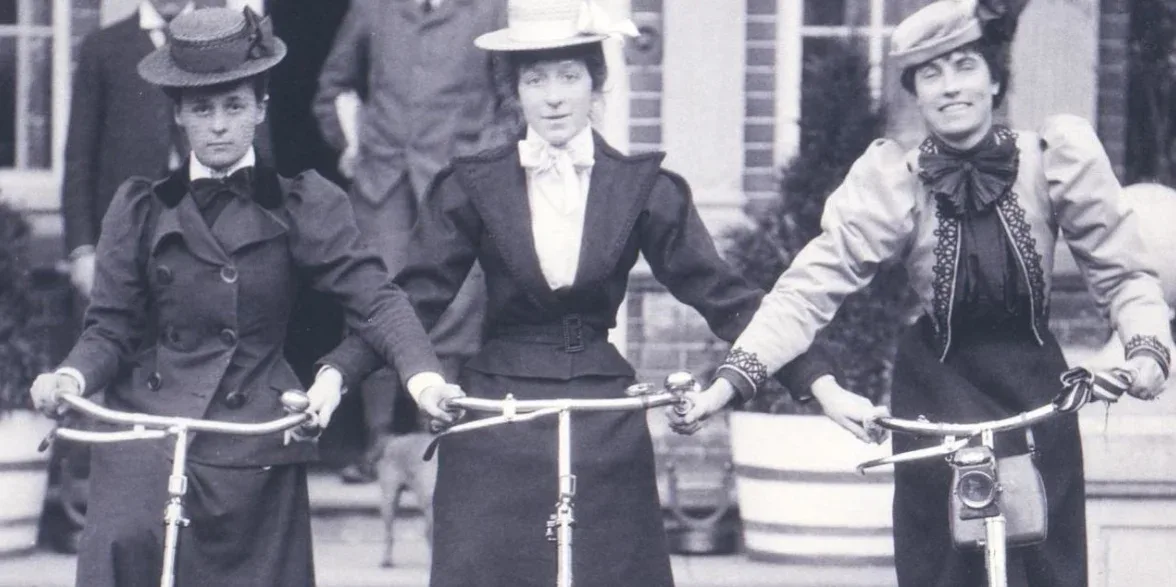
At the dawn of the twentieth century, urban fashion demanded near-monastic discipline and unwavering etiquette from young women. The prevailing silhouette resembled a delicate vase, yet behind this graceful exterior lay a daily test of endurance.
If you have ever watched Martin Scorsese’s cinematic classic The Age of Innocence or the opening scenes of Titanic, you will surely remember these breathtaking yet restrictive ensembles. Girls attending Manhattan schools and boarding academies spent entire days in floor-length, heavy wool skirts paired with crisp white blouses featuring stiff high collars that hugged the throat. Corsets were considered non-negotiable even for teenage girls, as society believed they cultivated proper posture and refined manners. Stepping outside without an elegant hat secured by a long metal pin, or without lace gloves, was seen as improper.
Browsing through the diaries and keepsake scrapbooks of Upper East Side schoolgirls from the 1900s and 1910s, one frequently finds tiny paper receipts and fabric swatches pinned beside portraits. They serve as tangible reminders of just how much effort everyday beauty demanded: merely lacing up high-button boots and fastening dozens of tiny blouse buttons each morning took considerable time and patience.
Yet the city was growing at breakneck speed, accelerating to the rumble of early subway trains, and women were the first to embrace the need for change. Family photo albums from this transition period begin to show the first signs of practicality: heavy, one-piece gowns gradually gave way to much more functional separates—bell-shaped skirts paired with breezy shirtwaist blouses. It was an essential first step toward freedom of movement, one that would soon redefine street style forever.
How Keepsakes Made Their Way into Scrapbooks
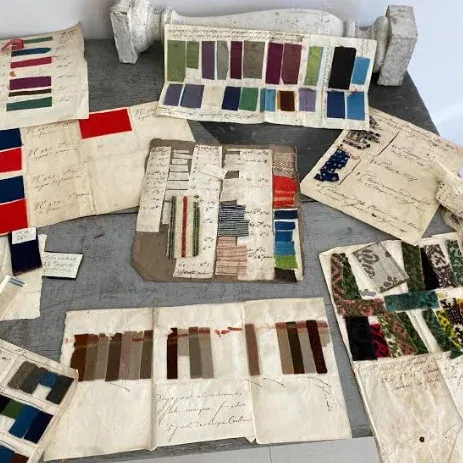
Keeping fabric swatches and receipts in family albums was far more than a sentimental whim for Manhattanites—it was a practical ritual of the era. Whenever a woman purchased ready-made attire or had a custom gown crafted, the garment came with a small fabric swatch. This served as proof of fabric quality and was kept on hand for thread-matching during alterations, mending, or dry cleaning.
Receipts and price tags from Manhattan’s iconic department stores—such as Macy’s on 34th Street, B. Altman & Co., and Lord & Taylor—carried special prestige. Girls carefully pinned them alongside portraits marking life milestones: a society debut, a boarding school graduation, or a countryside outing. For a young woman, that printed slip was a mark of distinction, while a sliver of silk or velvet offered a tactile connection to an unforgettable day.
From Roaring Jazz to Wartime Ingenuity
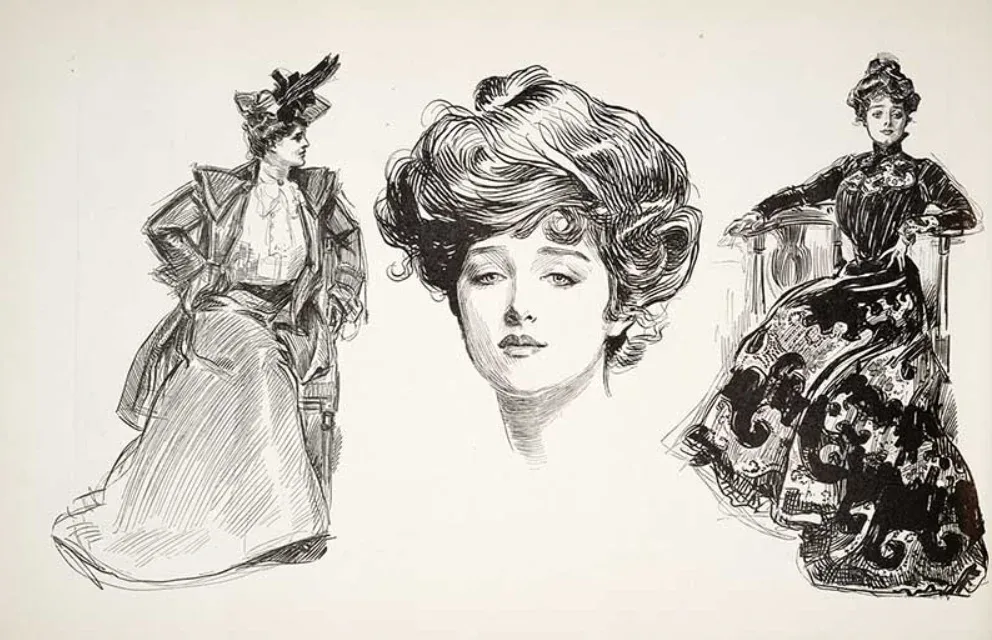
The First World War and subsequent societal shifts permanently overturned traditional notions of feminine beauty, sweeping away outdated conventions. As women won greater social and civil rights, their everyday wardrobes immediately embraced the triumph.
Anyone drawn to the spirit of The Great Gatsby or archival footage of the Roaring Twenties instantly recognizes that infectious energy. In family portraits from the 1920s, feminine silhouettes suddenly shed their rigid curves. Restrictive corsets were replaced by lightweight, straight-cut drop-waist dresses that playfully bared ankles for the very first time in modern fashion. Young women eagerly bobbed their hair, slipped on neat cloche hats, and stepped into sensible low-heeled shoes ideal for strolling Manhattan's avenues to the pulse of jazz.
The decades that followed brought fresh trials that once again transformed city sidewalks. Through the Great Depression and World War II, resourcefulness became fashion's defining feature.
Family trunks and aged envelopes from the 1930s and 1940s still yield tailoring bills and sturdy fabric scraps. They tell silent stories of how grandmothers crafted effortless elegance out of sheer scarcity: remaking bulky men’s suits into sleek, structured skirt suits with sharp padded shoulders, taking cues from the Hollywood screen sirens of film noir.
Meanwhile, across Manhattan’s academic institutions—especially among students attending lectures at Barnard College—practical knee-length pleated skirts, crisp cotton button-downs, and cozy knit cardigans became campus staples, laying the groundwork for what would become timeless preppy style.
Youth Quakes and the Rise of Denim
The postwar era unleashed a cultural phenomenon previously unseen in fashion history. Style was no longer reserved exclusively for mature women; instead, an energetic and rebellious youth culture took center stage.
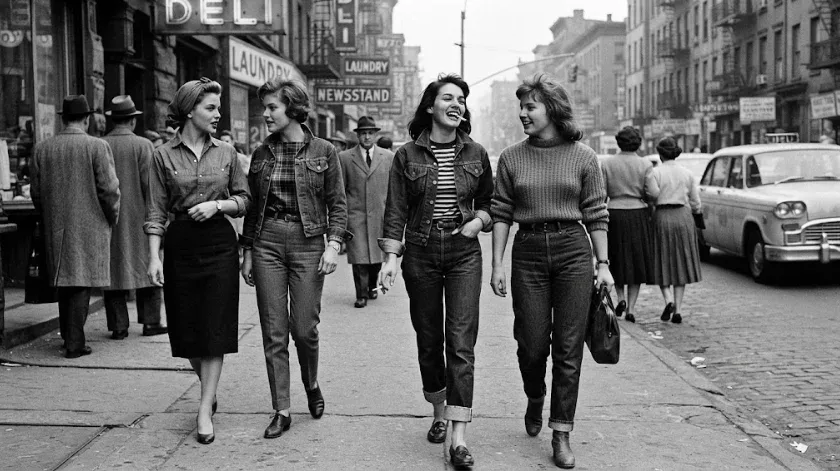
The 1950s embraced sweeping romanticism. In snapshots of high school and college graduates, girls twirl in voluminous swing skirts layered over crinolines, wearing fitted knit tops and two-tone saddle shoes or ballet flats that made navigating city sidewalks effortless. Just a decade later, youth sparked a full-scale aesthetic revolution. The 1960s ushered in bold mini skirts, colorful opaque tights, and mod shift dresses splashed with eye-catching geometric patterns. School administrators pushed back in vain—the drive for self-expression was unstoppable.
By the 1970s, fashion had reached a democratic turning point: blue denim became a universal staple. High-waisted flare jeans, fringed suede jackets, crochet vests, and chunky platform shoes emerged as the ultimate badge of freedom, authenticity, and comfort.
Style Mashups, Oversized Fits, and Street Culture
Toward the close of the century, the fashion industry turned fast-paced, eclectic, and unapologetically bold. Color photographs from the 1980s and 1990s capture an intriguing fusion of corporate power dressing and laid-back street culture.
The 1980s championed boldness, ambition, and vibrant color. Women’s closets filled with sharp blazers featuring oversized shoulder pads that broadcast workplace authority, standing side by side with neon leggings, baggy tracksuits, and voluminous teased hair.
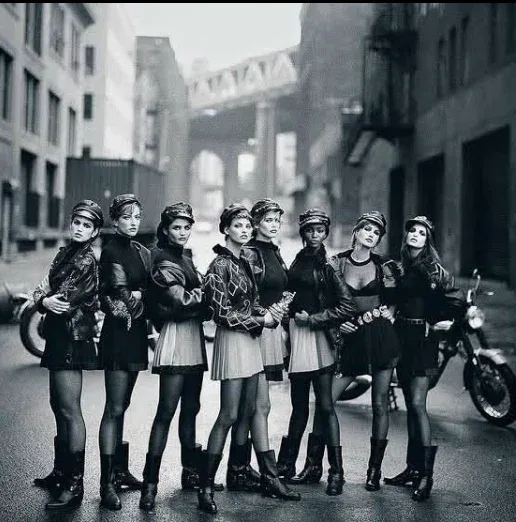
The 1990s swung back toward effortless ease and grunge-tinged nonchalance. Schoolgirls and college students masterfully paired feminine delicacy with gritty SoHo street aesthetics. Slip dresses worn over plain white tees became an everyday uniform, grounded by rugged Dr. Martens boots, while slouchy denim jackets and oversized flannel shirts became essential gear for wandering city avenues.
Style Evolution Checklist
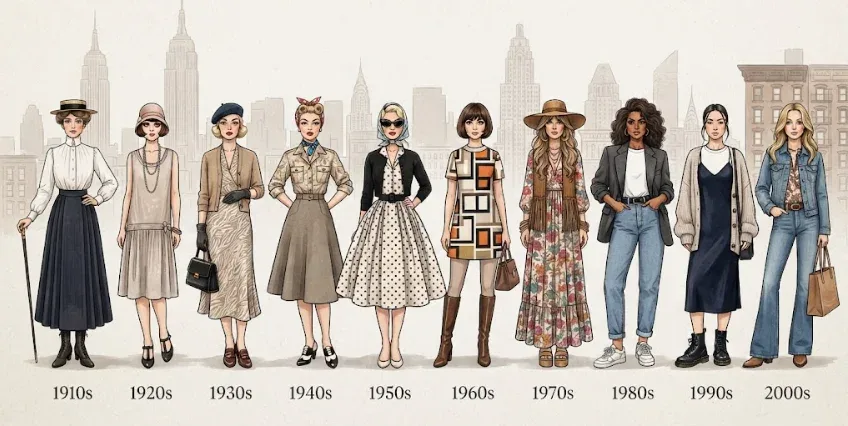
- The Era of Discipline and Liberation (1900s–1920s): City style began under strict social codes that demanded floor-grazing skirts, bone-tight corsets, and high, buttoned necklines. Rapid urban life soon prompted a shift toward functional separates like bell skirts and shirtwaists, culminating in the roaring 1920s with drop-waist silhouettes that liberated the body and revealed the ankles for the very first time.
- The Era of Practicality and Youth Rebellion (1930s–1970s): Weathering economic depression and wartime shortages, women redesigned menswear into sharp-shouldered tailored suits and pioneered preppy collegiate staples with pleated skirts and cardigans. This understated grace later erupted into mid-century swing skirts, the daring mini-dresses of the sixties, and the complete embrace of flared denim and casual freedom in the seventies.
- The Era of Individuality and Oversized Silhouettes (1980s–1990s): Modern street style culminated in bold, broad-shouldered power suits asserting feminine independence in the workplace. This soon transitioned into the effortless mashup of the nineties, where delicate slip dresses layered over white tees found an iconic counterpart in heavy combat boots and relaxed, slouchy layers.
Living Memories Woven in Fabric
Closing an old family album brings a gentle realization: clothing is never merely fabric cut to a pattern. It is an honest, living dialogue that women have carried on with the world across generations. Every transition—from heavy wool skirts and rigid stays to well-loved jeans and slouchy oversized blazers—marked a deliberate step toward self-determination.
Manhattan’s women did not simply follow trends; they authored their own history, turning ordinary pavements into their personal runways. In doing so, they left behind an enduring lesson: stay true to yourself in every detail, no matter what decade you find yourself in. Share your own family stories in the comments below—let’s celebrate and keep Manhattan’s living heritage alive together!